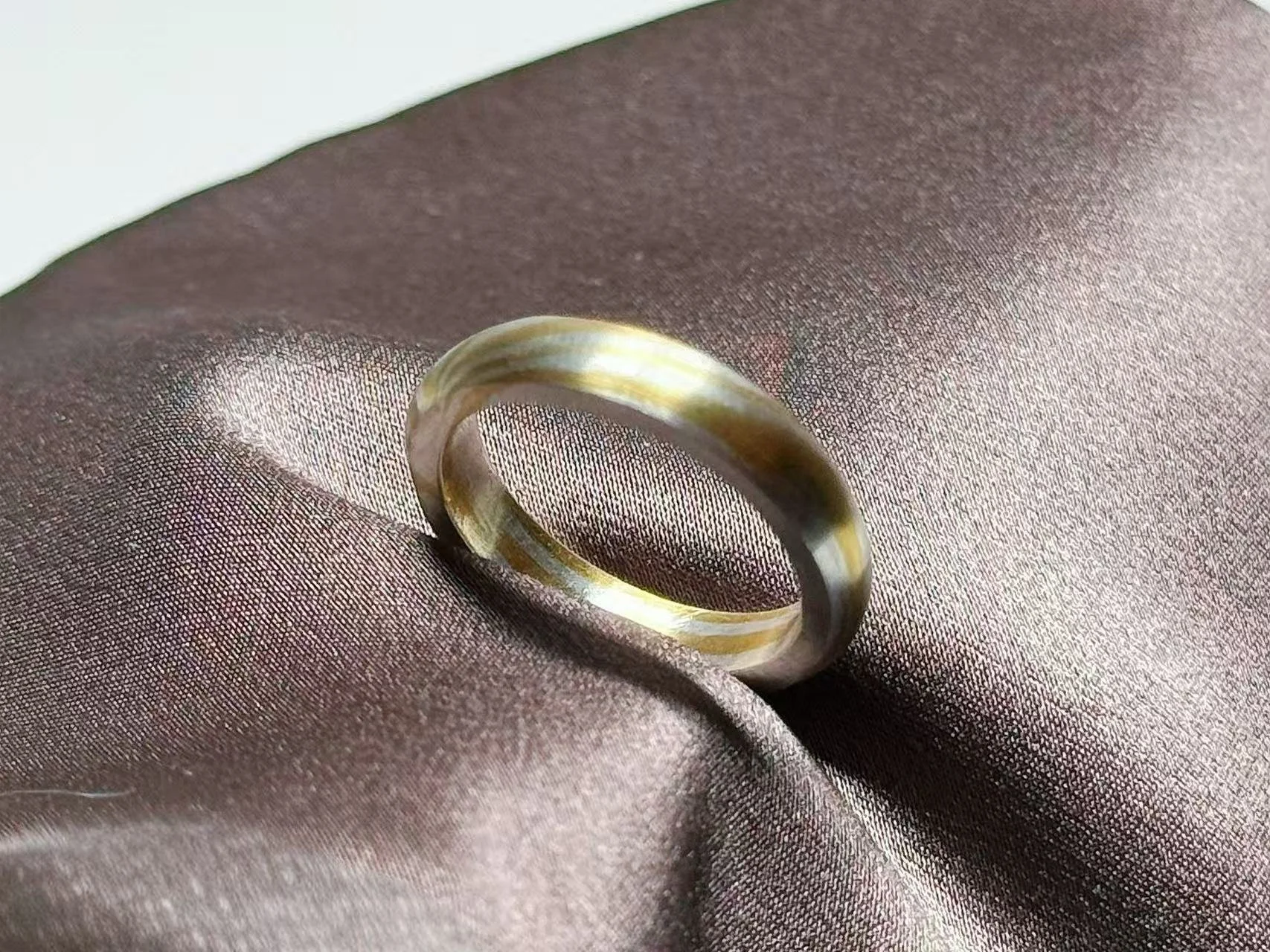
I speak through metal—the language of my craft.
Liz (Manjia) Zhu is a metalsmith based in the San Francisco Bay Area and a BFA candidate in the Jewelry and Metal Arts program at California College of the Arts. Born in Hubei and raised in Shanghai, she immigrated to the United States alone at the age of fourteen to pursue her education. Moving across the East Coast, Midwest, and California has shaped her ongoing exploration of identity, belonging, and family memory—recurring themes in her work.
Zhu regards traditional metalcraft as both her foundation and lifelong pursuit. For her, craft is a language and the grounding structure of her artistic practice. When she isn’t caring for her three cats, she can be found in the studio, absorbed in the meditative rhythm of making.
Artist Statement
The core of my practice lies in a profound reverence and fascination for traditional metalwork. I see craft not merely as a collection of techniques but as a living language that carries history, culture, and emotion. I devote much of my time to learning and refining different processes—fabrication, stone setting, chasing, and marriage of metals. Each technique feels like an extended conversation with generations of artisans who came before me. To master these skills is not to repeat the past, but to renew it—to continue a lineage through my own hands.
My creative inspiration often comes from my personal life: migration, identity, and the emotions of family. However, there are many moments when I do not begin with a specific concept. Instead, I simply lose myself at the bench, experimenting, practicing, and letting the act of making lead me. The process itself becomes the purpose; the act of making transforms into reflection and quiet discovery. Among all techniques, Mokume Gane, a traditional Japanese method of marriage of metals, resonates with me the most. The process fuses layers of different metals through heat and pressure. Then, forged and twisted, the metal reveals natural, wood grain–like patterns—each one unique and unrepeatable, like a personal journey. Every process becomes a quiet dialogue, a negotiation between will and material. The beauty of the finished work does not arise from control but from balance—the moment when the metal and I find understanding.
Working at the bench draws me into a flow state, offering a sense of calm and pure joy that is both grounding and liberating. Before coming to CCA, I saw art primarily as a means to express emotion—my own or others’. Now I see it as a lifelong pursuit: to refine my craft until it becomes a universal, emotional language—one that speaks with the voice of both tradition and the present moment.